




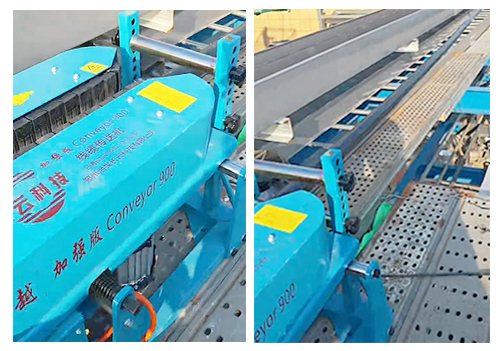
Discover how keepapexpower Technology’s smart cable conveyor streamlined high-rise building cable laying for a commercial complex. 10kV power cable, 26m/min speed, automatic tension control & 100% pass rate. Read the full case study.
Cable laying for high-rise buildings presents unique challenges: long vertical runs, tight bends, heavy cables, and high safety requirements. When traditional manual pulling or capstan winches are used, risks of cable damage, twisting, or delays multiply.
This case study examines how keepapexpower Technology’s intelligent cable conveyor solved these issues for a large commercial high-rise complex, delivering industry-leading efficiency and a perfect 100% cable laying qualification rate.
Project Overview
Project High-rise commercial complex power system installation
Location Urban business district
Cable type 10kV power cable
Cable outer diameter 25 mm
Single cable length Over 1,000 meters
Challenge Complex vertical shafts, narrow conduits, multiple turning points
Equipment used keepapexpower Technology cable conveyor (high traction + auto tension) + custom guide device
The building’s power system required faultless cable installation to ensure stable operation for retail floors, offices, and critical emergency systems.
The Challenge: Why Traditional Methods Fail in High-Rise Cable Laying
Traditional cable pulling methods (manual labor or winch pulling) commonly cause:
Cable slippage – loss of grip on long vertical runs
Over-tension – insulation stretching or core breakage
Sheath abrasion – cable damage against conduit edges or corners
Twisting – internal stress leads to premature failure
Low efficiency – 5–10 m/min, high labor cost
For a 1,000-meter 10kV cable with multiple bends, conventional approaches often lead to rework, material waste, and project delays.
The Solution: keepapexpower Technology Cable Conveyor System
keepapexpower deployed a purpose-engineered cable conveyor system tailored to the complex’s needs.
1. Equipment Compatibility
Based on detailed assessment of cable specifications (10kV, 25mm OD, >1,000m length), keepapexpower selected:
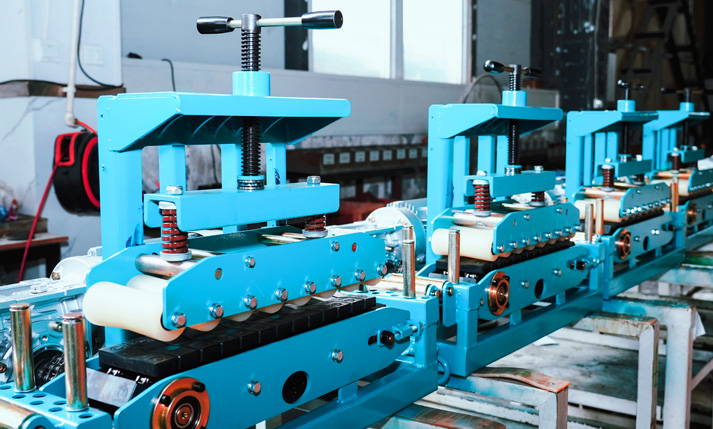
High-traction conveyor – delivers stable pulling force without slipping
Automatic tension adjustment – adapts to load changes in real time
Custom cable guiding device – prevents lateral movement and protects the outer sheath
This ensured zero slip and zero insulation damage during the entire 1,000+ meter run.
2. Automated Construction Workflow
Unlike manual pulling, the keepapexpower conveyor operates with minimal human intervention:
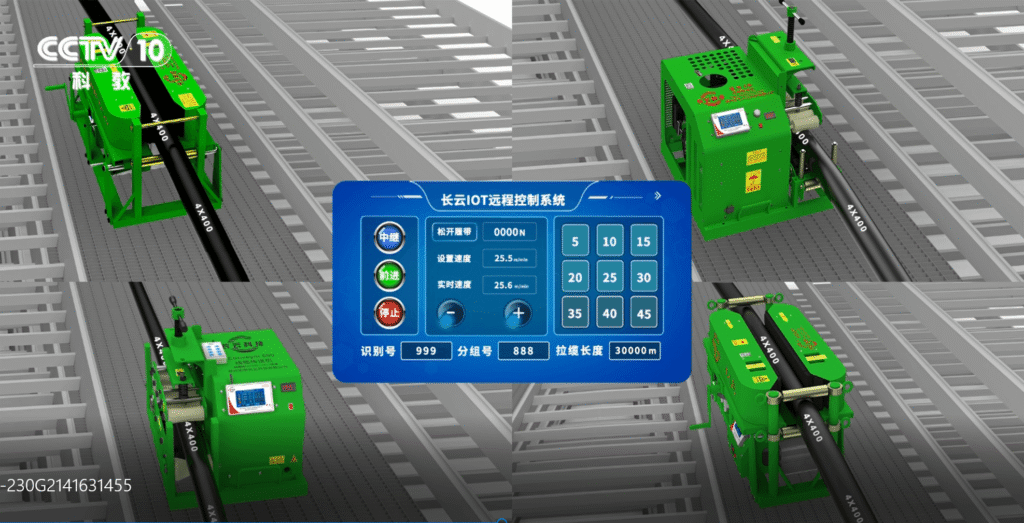
One‑button speed control – 26 meters per minute (260% faster than conventional methods)
Fully automated operation – reduces human error, fatigue, and misalignment
Continuous operation – eliminates stop-and-start stress on the cable
3. Real‑Time Safety & Quality Assurance
The conveyor integrates a built-in tension monitoring system that:
Provides real-time feedback on cable stress
Automatically reduces speed or alerts operators if tension exceeds safe limits
Prevents cable breakage, elongation, or conductor twisting
Combined with cable guide wheels at every turn and conduit entry, the system ensures precise laying even on complex paths – vertical risers, horizontal transitions, and 90° bends.
Results & Performance Metrics
Metric Result
Average laying speed 26 meters/minute
Cable length per run >1,000 m
Tension-related incidents 0 (zero cable breaks or over‑stretch)
Slippage or sheath damage 0
Cable laying qualification rate 100%
Project schedule impact Reduced installation time by ~60% vs manual methods
The project achieved 100% cable laying qualification rate – every meter of 10kV cable passed post‑installation testing, providing a solid foundation for the complex’s power system reliability.
Efficiency Comparison: keepapexpower Conveyor vs. Traditional Pulling
Parameter Traditional Winch / Manual keepapexpower Cable Conveyor
Speed (m/min) 5–10 26
Tension control Manual guesswork Automatic real‑time feedback
Risk of cable twist High Eliminated
Labor crew size 6–8 persons 2–3 persons
Pass rate after first pull Often <85% 100%
Why This Case Matters for High-Rise Power System Construction
For engineers, contractors, and project owners, this case study demonstrates that:
Automated cable laying is not just faster – it is safer and more reliable.
Tension monitoring is essential for long 10kV cable runs to prevent hidden damage.
Custom guide devices solve the problem of tight bends and vertical shafts without extra sheave rollers.
100% qualification rate directly translates to lower total project cost (no rework, no cable replacement).